Voice AI Compliance in Travel & Hospitality
Major compliance concerns for voice AI systems used in travel and hospitality are privacy, consumer protection, and payment security. Where international data and financial transfers occur, data-sharing chains and regulatory jurisdictions are also concerns.

Why It Matters
Travel voice AI handles sensitive data across borders – and compliance expectations are high.
Interactions often include payment details, personal data, and travel itineraries.
Third-party partners using voice AI introduce additional compliance risk.
Regulations evolve – ongoing monitoring is essential to avoid severe penalties and loss of customer trust.

Where Voice AI is Used
Reservation support (inbound/outbound)
Manage bookings and changes while protecting payment and itinerary data.
Loyalty programme management (inbound/outbound)
Support member accounts while keeping authentication and data-handling compliant.
Guest assistance (inbound)
Handle requests and issues without over-collecting or mishandling personal data.
Travel information (outbound)
Deliver updates and alerts without crossing consent or disclosure boundaries.
Key Risks in Travel and Hospitality
Travel and hospitality voice AI often involves personal data, payments, and cross-border processing – so privacy, consumer protection, and security risks are high.
Data Security
There are serious ramifications for mishandling personal data or payment information, e.g., fines up to €20M (GDPR) + $100,000/month (PCI DSS).
Accuracy and Customer Safety
Misinformation (e.g., booking status or travel conditions) can cause financial losses or customer safety risks.
Cross-Border Data Transfer
Risks increase when data is processed or stored internationally.

How Voicelint Helps
Voicelint verifies for compliance in disclosure, consent, privacy, and data-handling across multilingual and multi-jurisdiction environments.
500+
Production systems verified
4
years of experience
50k+
Violations identified
Compliance Challenges
Travel voice AI frequently touches payments, personal data, and cross-border processing – and small mistakes can quickly become major compliance issues.
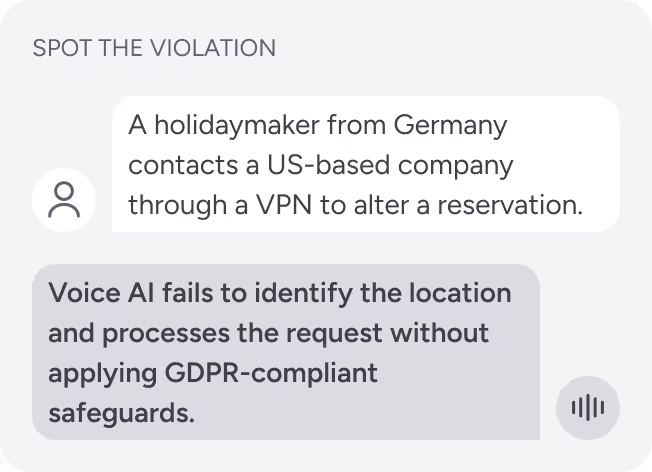
Challenge 1: Cross-border data transfer without legal basis
Violation: Transferring EU personal data to the US without a valid safeguard breaches GDPR cross-border rules. Fine exposure: up to €20M or 4% of global revenue.
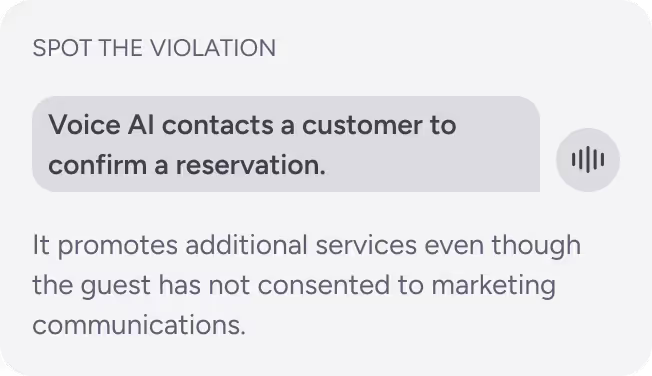
Challenge 2: Marketing consent violations
Violation: Using customer data for marketing without explicit consent violates GDPR (EU), CCPA (US), and other outbound marketing regulations. Fine exposure: $500–$1,500/call (TCPA) + $7,500/violation (CCPA).
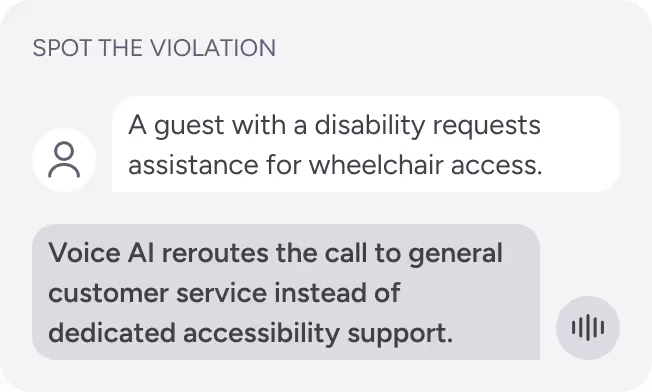
Challenge 3: Inaccurate accessibility support routing
Violation: This may constitute unauthorized disclosure or mishandling of sensitive personal information, potentially breaching privacy regulations such as GDPR (EU), HIPAA (US), or equivalent local laws. Fine exposure: up to €20M (GDPR).
Make Your Travel Voice AI Verifiably Safe
Join hundreds of organisations ensuring confidence in their voice AI deployments with expert compliance validation.